

Meet Megan
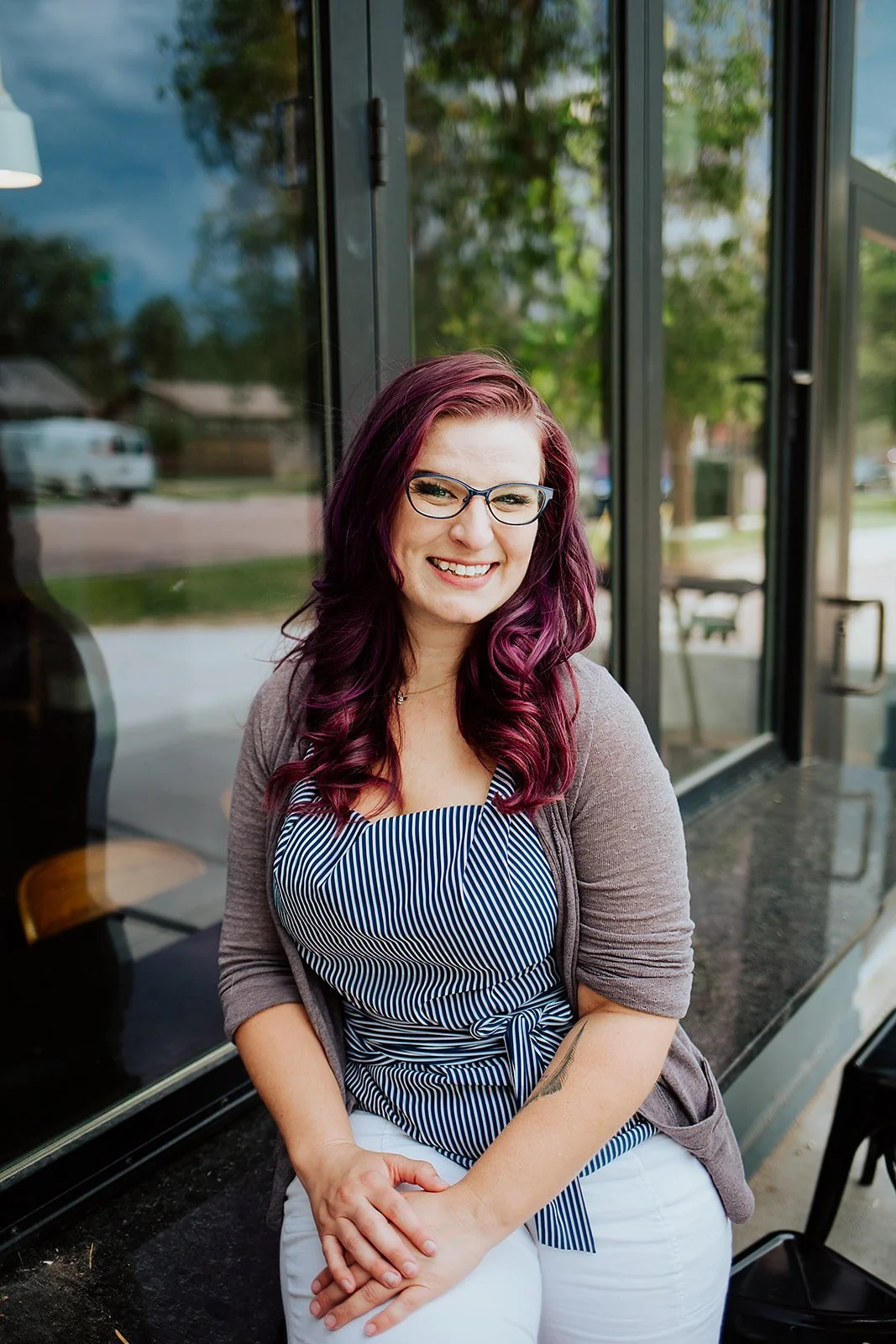
Megan Cullen, MSEd LPC-S
she/her/hers
I’m Megan, a therapist who believes healing happens best in spaces that feel collaborative, affirming, and real. I’m not here to sit behind a clipboard and nod; I’m here to be in it with you—curious, honest, and on your side as we sort through what’s going on.
I’m a queer, poly, Jewish therapist, and those parts of my identity shape how I understand systems, relationships, and the many ways people make meaning. They inform my commitment to creating spaces that are actively affirming—not just “accepting”—of LGBTQIA+ folks, non-monogamous and polyamorous relationships, and people whose identities or families don’t fit neatly into dominant narratives. At the same time, I don’t assume my identities are yours, and I don’t push my worldview onto the people I work with. Therapy with me is not about telling you who you are or how you should live—it’s about helping you better understand yourself and build a life and relationships that feel more aligned for you.
I especially love working with LGBTQIA+ folks, gender-expansive people, neurodivergent humans, partners in non-monogamous and polyamorous relationships, and anyone who’s trying to make sense of complex trauma, big feelings, or a life that doesn’t fit neatly into boxes. My clients often describe me as warm, straightforward, and occasionally a little funny in the moments when it helps the most.
About You
If we’re a good fit, you’re probably someone who cares deeply and carries a lot—about people, about justice, about doing things thoughtfully—even when you’re exhausted.
You might be:
Untangling questions around gender, sexuality, identity, or neurodivergence.
Navigating polyamory or non‑monogamy and realizing there’s a lot more to it than “love is infinite.”
Sitting in a relationship wondering, “I don’t know what we need, but this can’t be it.”
Trying to function with a nervous system that has been shaped by complex trauma, chronic stress, or dissociation.
Good at holding things together for others and less practiced at letting people see the parts of you that feel messy, scared, or not‑okay.
You do not need to show up with a neat story, perfect insight, or a clear treatment goal. You’re allowed to come in overwhelmed, numb, angry, ambivalent, or unsure if therapy will actually help. We can start exactly where you are.
About Therapy
Therapy with me is a conversation, not a performance or an interrogation. We’ll move at a pace that feels manageable, checking in regularly about what’s working, what isn’t, and what you’re noticing inside and outside of session.
In our work, we might:
Look at the stories you’ve been carrying about who you have to be and where they came from (narrative therapy).
Get to know different “parts” of you—protective, hurt, numb, angry—and see what each is trying to do for you (IFS‑informed work).
Notice patterns in your relationships and in the space between us in session (interpersonal processing).
Build practical tools for tolerating big feelings, challenging unhelpful thoughts, and moving toward what matters to you (CBT, DBT, ACT).
I’ll offer reflections, questions, skills, and sometimes gentle challenges, but we’ll always anchor to your consent and your sense of what feels safe enough to try. My hope is that therapy with me feels like having a thoughtful, steady person next to you—someone who can hold complexity, keep an eye on the big picture, and help you find ways forward that are actually aligned with who you are.